Why Visit Saudi Arabia?
I never imagined I would step foot in Saudi Arabia. But a decade in China has taught me that sometimes the challenges of living in a country with a certain reputation are maybe a little different than you might expect. And as someone who wants to remain open and curious about the world - a world which, let’s face it, might not remain open and peaceful forever - I wanted to see this place for myself.
What I learnt is that Saudi Arabia is undergoing an economic and social revolution that reminds me very much of China. Neither are democracies, and neither have planned their development based on models borrowed wholesale from the West. This engenders an inherent discomfort and distrust from many onlookers. Furthermore, the outside world judges them based on a certain basket of baked-in perceptions. Yet both have managed so much change - and in such incredibly short timeframes - that many of these perceptions are increasingly outdated. Not all… but many. I thought that China changed fast in the 2000s and 2010s, but Saudi Arabia of the 2020s makes this all look rather tame. It’s no wonder that many of the young and hungry international entrepreneur-types that used to be such a common sight in Shanghai and Beijing are now popping up in Riyadh and Jeddah.
I’m no deluded apologist about either system, both countries have myriad issues and it’s important to be critical when it comes to seeing what they can deliver over the coming decade. But “seeing” is indeed the first step, and I’m glad that I took a week to do so for myself. And speaking just as a visitor, I would also say that because the tourism industry here is so brand new, the Saudi sense of hospitality feels totally genuine, and not yet jaded by years of mutual ambivalence. So for that reason alone, it was well worth the trip.
I spent 6 days in Saudi Arabia: 3 days in Riyadh, followed by a flight to AlUla, a car to Medina, and a train to Jeddah. To summarise:
🌆 Riyadh seemed to me like one of those capitals where you’re always aware of your proximity to power. It’s this proximity that has afforded it lots of new trinkets and lavish infrastructure, but in exchange it feels a little... tightly-wound. People here know how to blow off steam, but they do so mainly within the perimeters of their private residences.
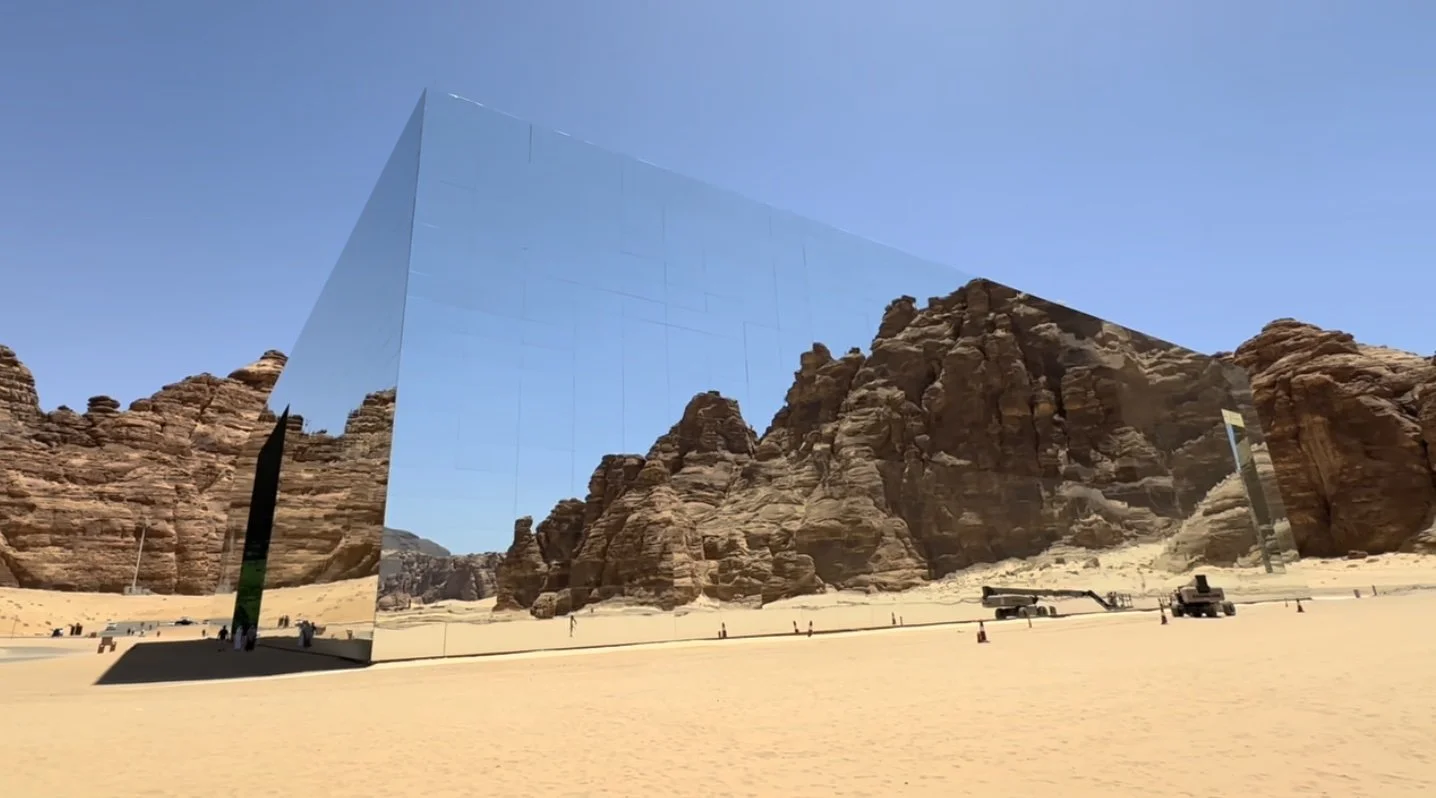
🛕 AlUla is being carefully and authentically developed as *the* premium tourist destination of Saudi Arabia. A blend of geological wonder and ancient civilisation, with a unique ambience and a modern eye for detail. The tourism industry is so new that the Saudi sense of hospitality feels totally genuine, and not yet jaded by years of mutual ambivalence.
🕌 Medina is the second holiest city in Islam after Mecca, and they’ve just started allowing non-Muslims to visit. (Mecca remains strictly off-limits). There are something like 20 popular mosques to visit, I ended up getting driven to five of them by an eccentric Yemeni taxi driver called Habib before heading to the train station.
🏖️ Jeddah is the Red Sea port city with a history of migration and openness. If Riyadh is the Beijing then Jeddah is for sure the Shanghai, albeit with better seafood. And if Medina represents the sacred, then Jeddah represents the swagger. Case in point: as I’m writing this on my flight out of Saudi Arabia, the Formula One weekend is kicking off on the Corniche.
Top 3 fun facts:
🇸🇦 Saudi Arabia imports sand. The country is literally covered in it, but it’s the wrong kind for making concrete.
🇸🇦 The King Fahd International Airport is the largest in the world. At 9,080 acres, it’s bigger than the neighbouring country of Bahrain.
🇸🇦 There are no rivers in the whole of Saudi Arabia. It gets its water through desalination, wadis, and groundwater.
For the Instagram version, see here.
For the Facebook version, see here.
For the YouTube version, see here.
For the LinkedIn version, see here.