





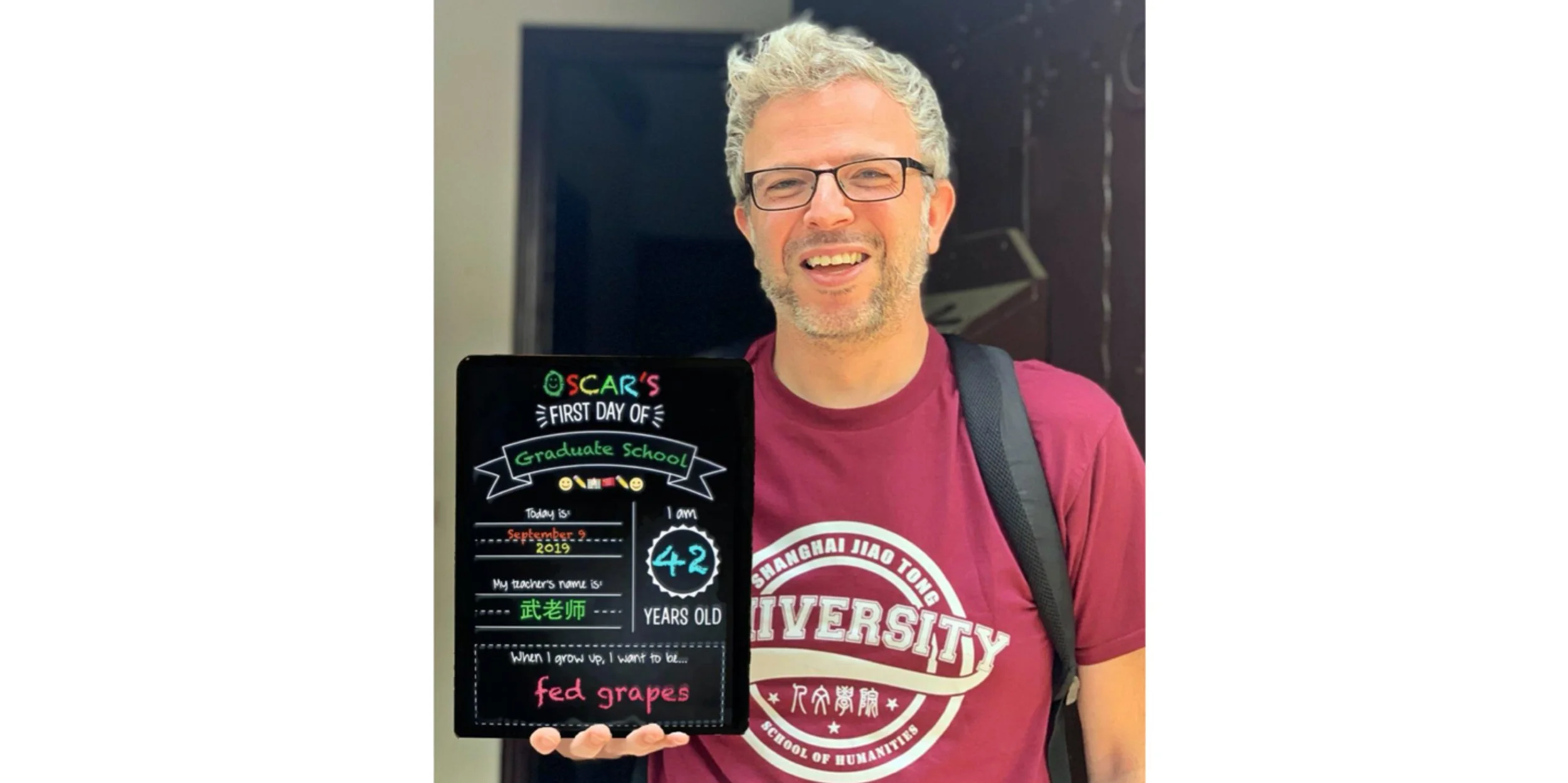


Who's That Boy?
I first stepped foot in Asia exactly 20 years ago, for a one-year adventure teaching English in Western Japan. The boy in this photo is still on his adventure.
私はちょうど20年前にアジアに足を踏み入れました,西日本で英語を教える1年間の冒険でした。この写真の中の少年はまだ冒険中です。
20年前,我第一次踏上亚洲,在日本西部进行为期一年的英语教学。这张照片中的男孩还在冒险。


Mandarin Official
Learning a new language in your 40s is a humbling experience. So it’s nice to at least get a certificate out of it.
在40多岁时学习一门新语言是一种丢脸的体验。 所以获得证书是太好了。

For the LinkedIn version, see here.

Did That Really Happen?

Today marks exactly 10 years since I somehow completed the RacingthePlanet 250km ultra-marathon through the deserts of Namibia. With a finishing time of 46 hours, 7 minutes and 35 seconds, I came 50th out of over 200 competitors.
Since then I have spent the last decade celebrating by lying on the couch eating pies.
For the Facebook version, see here.
For the Instagram version, see here.
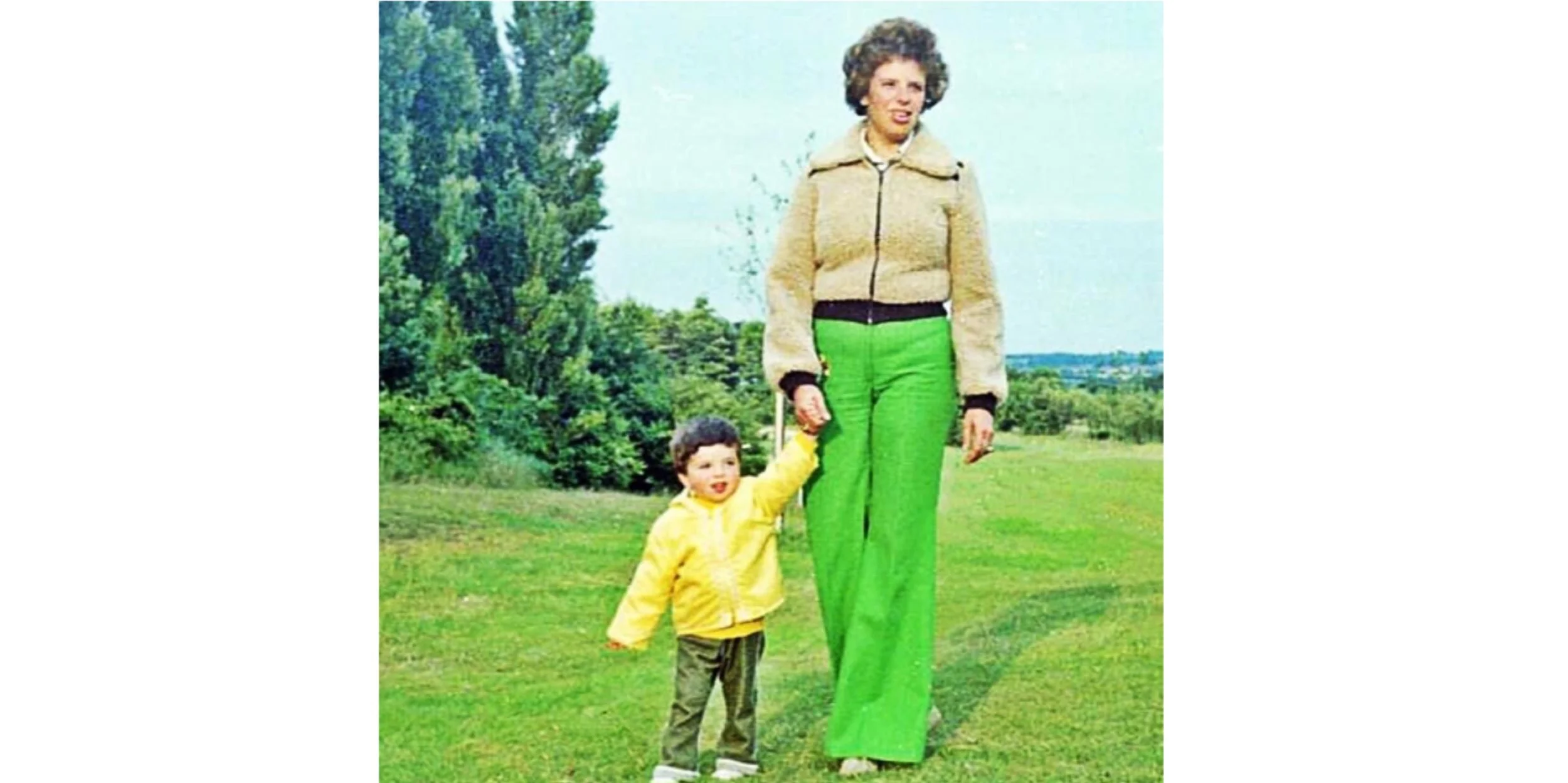
A Photo of Mother and Son

A photo of mother and son back in 1979.
I was 2, she was 32.
We were... Thirty years apart.
She died on this day in 1989, she was 42.
The same age I’ll be this year.
It’s been... Thirty years apart.
For the Facebook version, see here.


Too Many Commas
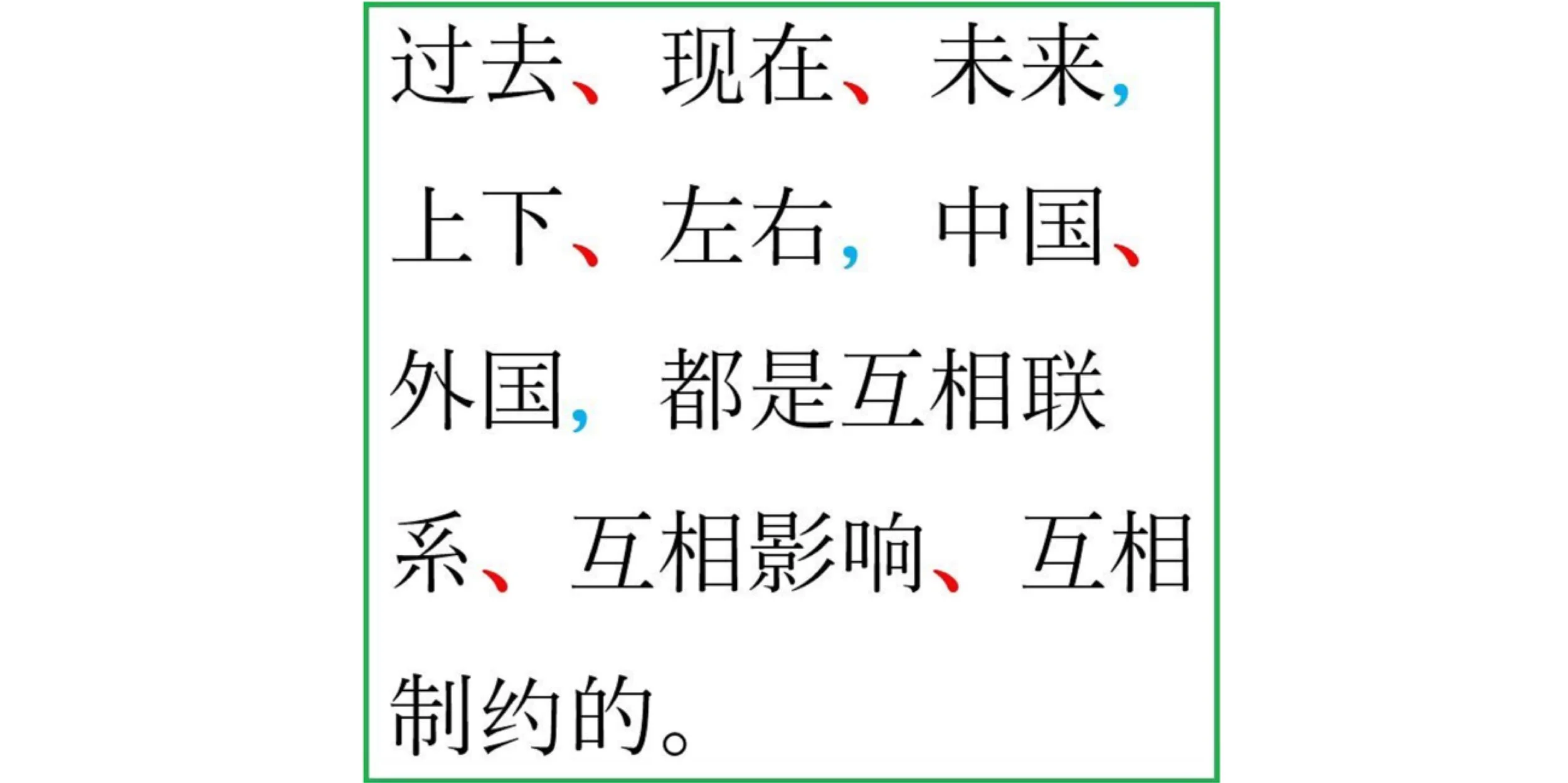
I just learnt that there are two types of comma in Chinese:
逗号 is the regular comma ( ,) and
顿号 is the back-sloping comma ( 、).
The normal comma is used for pauses in speech; the back-sloping comma is used for the slightly shorter pauses you make when listing two or more things.
Here’s an example of their usage, with the English explanation below:

Here’s how this example would look in English:
“Past、present、future,up and down、left and right,China and foreign countries are all mutually connected、mutually influential、mutually restrictive.”
Oh, and the semicolon is used in the same way as English, to signify a shift between clauses. So in order of longest pause to shortest pause, it goes as follows:
。
;
,
、
For the Instagram version, see here.

Today I Bid a Final Farewell to ChapmanCG

It has been just over a decade since we started The Chapman Consulting Group in Singapore. It is now the largest organisation of its kind in the world, with senior HR appointments in 69 countries, and over 110,000 executive HR leaders in its global network. Playing a part in this trajectory has been by far the most rewarding professional achievement of my life, and I owe a huge debt of thanks to Matt, to past and present members of the amazing ChapmanCG team, and to the tens of thousands of HR professionals around the world whom I’ve learnt from, and hopefully helped in some small way in return.
With a new strategic investment from Will Group (株式会社ウィルグループ), and the continuity of it’s existing management team, I have no doubt that ChapmanCG will maintain its position in offering the world’s best Executive Search solution for the HR Profession. I will no longer be part of the ChapmanCG story moving forward. But I wish everyone all the best, and look forward to our paths crossing again in a personal capacity.
Oscar
For the LinkedIn version, see here.

totaLly teamLab
We went in search of some festive illuminations, and boy did we find them.
Here’s wishing you all a MERRY CHRISTMAS!

For the Instagram version, see here.


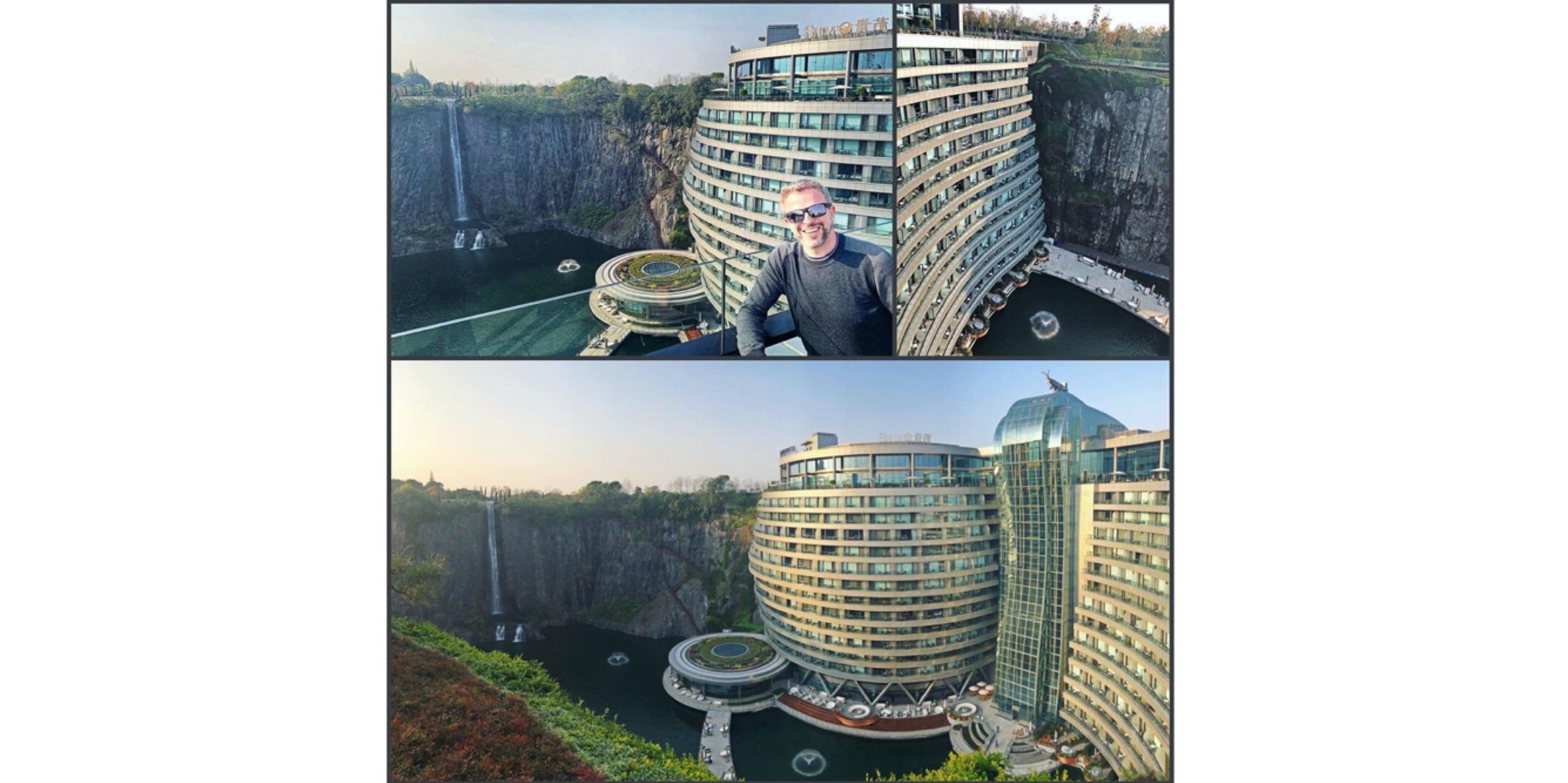
Hotel in a Quarry

I visited the new Intercontinental Hotel, built into the side of a disused quarry. There are only two floors above ground, the rest is underground, and the lowest floor (B15) is underwater.
The whole thing is beautiful and bizarre in equal measure.
For the Instagram version, see here.

“98 Years Old”

I bumped into this amazing 98 year old lady.
I know this because the only Chinese I could understand her say was “I’m 98 years old”.
For the Instagram version, see here.

Coffeeshop Flags
In case you STILL didn’t think I was a nerd... I spent twenty minutes in Costa Coffee testing myself on the identity of these flags. And I got them all correct. 🤓🤓🤓 (Answers below.)

Answers from front to back:
Niger, Bahrain, Lesotho, Micronesia, United Nations, Cape Verde, Cuba, Turkmenistan, Marshall Islands, Bangladesh, Guyana, Panama, Macedonia, Maldives, Lithuania, Uzbekistan, Finland, North Korea, Guinea, Austria, Djibouti, Sao Tome e Principe, Cook Islands, Mongolia, Bhutan, Mali, Venezuela, Russia, Iran, Liechtenstein, Scotland, Somalia, Sweden, Bahamas, Andorra, Australia, United Kingdom, Afghanistan, France, Brunei, Morocco, China, Germany, Chile, Kenya, Sudan, Azerbaijan, Mexico, Ireland, Samoa, United Arab Emirates, Ghana, Chad, Fiji, Greece, South Korea, Ukraine, Kazakhstan, Slovenia, Spain, Zimbabwe, Democratic Republic of Congo, Angola, El Salvador, Singapore, Bulgaria, Canada, United States, Egypt, Saudi Arabia, Liberia, South Africa, Argentina, Uruguay, Ivory Coast, Papua New Guinea, Dominican Republic, Burundi.
And here are the flags that I always find most difficult to differentiate:
🇸🇳🇲🇱🇬🇳 (Senegal vs. Mali vs. Guinea),
🇲🇩🇦🇩🇹🇩🇷🇴 (Moldova vs. Andorra vs. Chad vs. Romania, I don’t even know the difference between Chad and Romania),
🇵🇱🇮🇩🇲🇨 (Poland vs Indonesia vs. Monaco. Monaco is longer than Indonesia.)
🇮🇪🇨🇮 (Ireland vs. Ivory Coast)
🇻🇪🇪🇨🇨🇴(Venezuela vs. Ecuador vs. Colombia)
🇱🇺🇳🇱 (Luxembourg vs. Netherlands. NL blue is darker.)
🇸🇮🇸🇰 (Slovenia vs. Slovakia)
For the Instagram version, see here.


Should We Stop Using the Word ‘Expat’?
I’m always wary when someone is referred to as an expat. It’s a term still commonly used by Human Resources professionals to refer to employees who have been sent on assignment overseas. But maybe it’s time to stop using this word altogether.

The Ickiness
My biggest complaint is the neo-colonial aspect to the word itself. It has been great to see how employees from every corner of the world have now been expatriated from their home countries. Let’s send more qualified Kenyans to Kuwait; Vietnamese to Venezuela. But to me there’s still a congenital ‘whiteness’ about the word. Why am I an expat, but a builder from Bangladesh is a migrant worker? Aren’t we both just different kinds of economic migrant?
The Detachment
Referring to an international assignee as an expat can create a barrier between themselves and the people around them. The title becomes an excuse for them to disassociate themselves with their office surroundings, and not truly engage with their host environment. It lets them group themselves with other ‘expats’, define themselves by their differentness, and engender an us-versus-them mentality. Before long, when an ‘expat’ has a bad day they might say ‘I hate this country’, rather than say… ‘I’m having a bad day’.
The Ego
The term brings with it a sense of elitism and entitlement. A company should certainly help an international assignee with their lives, be it getting through the pain of relocation, helping with schooling costs, or advising on tax issues. But referring to the assignee as an expat adds an extra layer of status, which once given can be hard to retract. The next generation of internationally-mobile employees should be taught that an assignment is just part of their job description, not a perk, nor a badge of honour.
I was inspired to write this article in part because I hear a loud drumbeat of nativism around the world, especially tied in with anti-immigration sentiments. I’m personally the son of political refugees, and have been an economic migrant in Asia for over a decade. I also believe that a migrant should do their best to assimilate into the fabric of their new society. But it never escapes my attention that we have double standards for migrants in the West versus Western migrants living in the East. To some extent, global multinationals and HR leaders can help to reconcile this double standard by limiting the use of this term.
What are your thoughts? If you agree, what terminology would you suggest we use? Do you disagree, and am I just yet another hapless victim of political correctness? Do you have any stories of ‘Expats behaving badly’? Your answers and comments gratefully received!
For the LinkedIn version, see here.
For the Facebook version, see here.


Sweat, Balance, and Momentum
I passed this man on the streets of Shanghai and was immediately inspired.

Sweat
You can be the most gifted in your field, but without Diligence you won't succeed. Don't be complacent of your superior skills: Lean into your work, and commit.
Balance
Sweat is useless without Sustainability. We all need to balance our work, leisure and family priorities to last the full course. Maximise your capabilities, but be kind to yourself and don't... overload your rickshaw.
Momentum
Sustainable effort needs to be funneled into the right Direction. We all have days where we work hard, and yet still question whether anything tangible was achieved. Have the curiosity to seek out and define your goals, and the daily persistence to achieve them.
For the LinkedIn version, see here.
For the Instagram version, see here.