
Turtle Power Shower
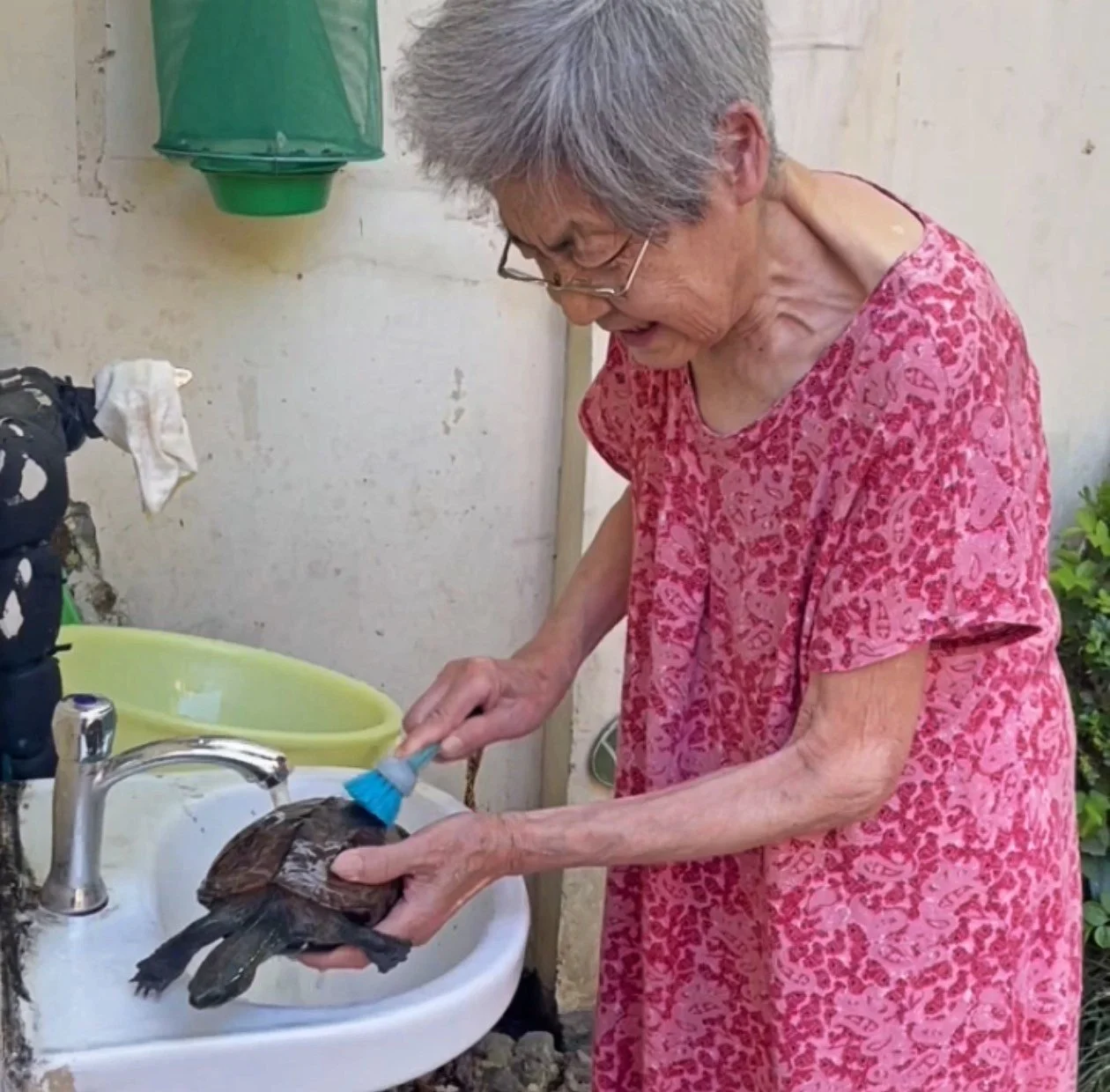
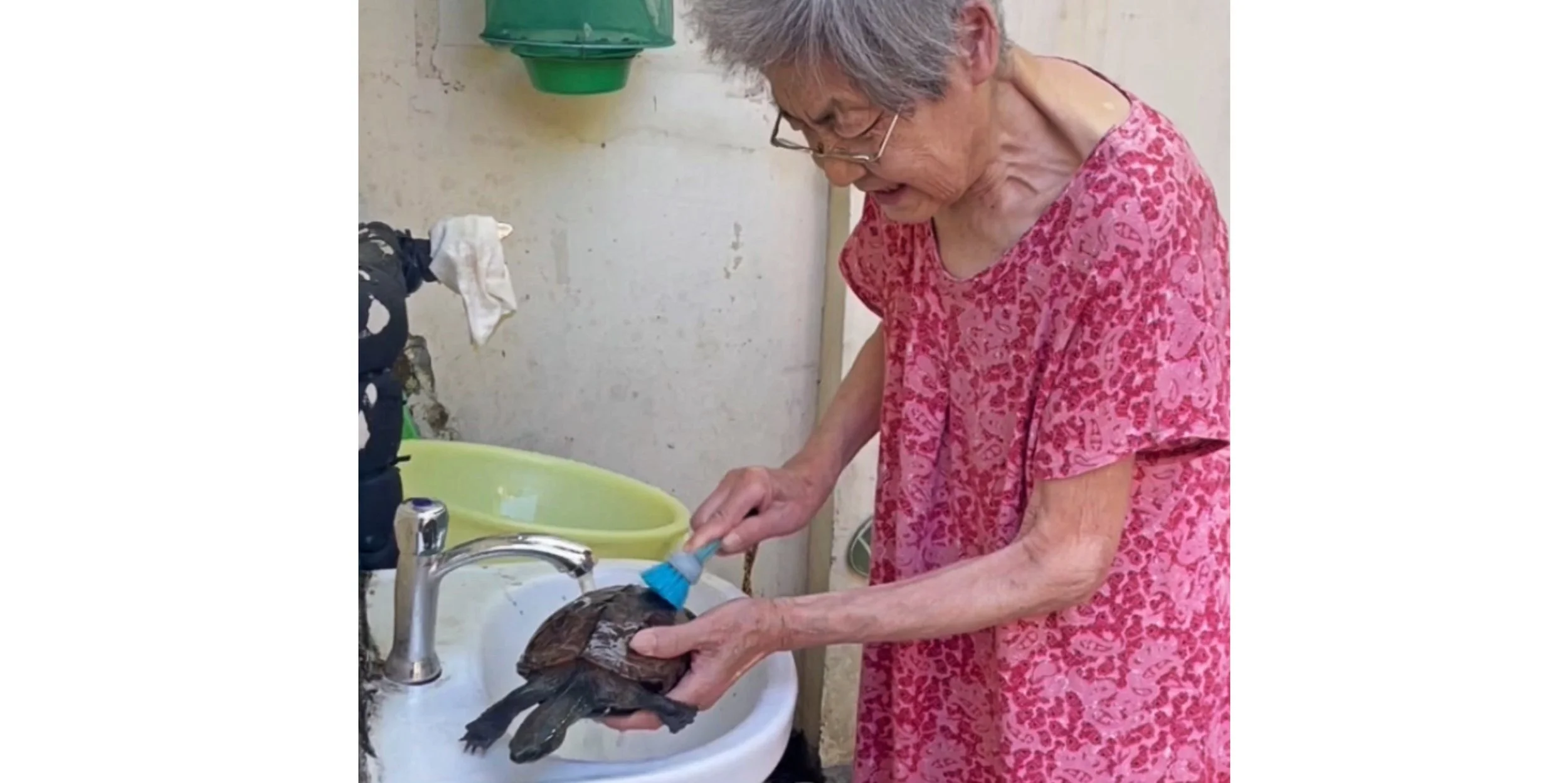
Yes it’s my neighbour giving her pet turtle a bath. Nothing to see here. 👵🐢🫶
For the Instagram version, see here.
My Evolving Thoughts on Gentrification
I thought I would write a post on my evolving feelings about gentrification.
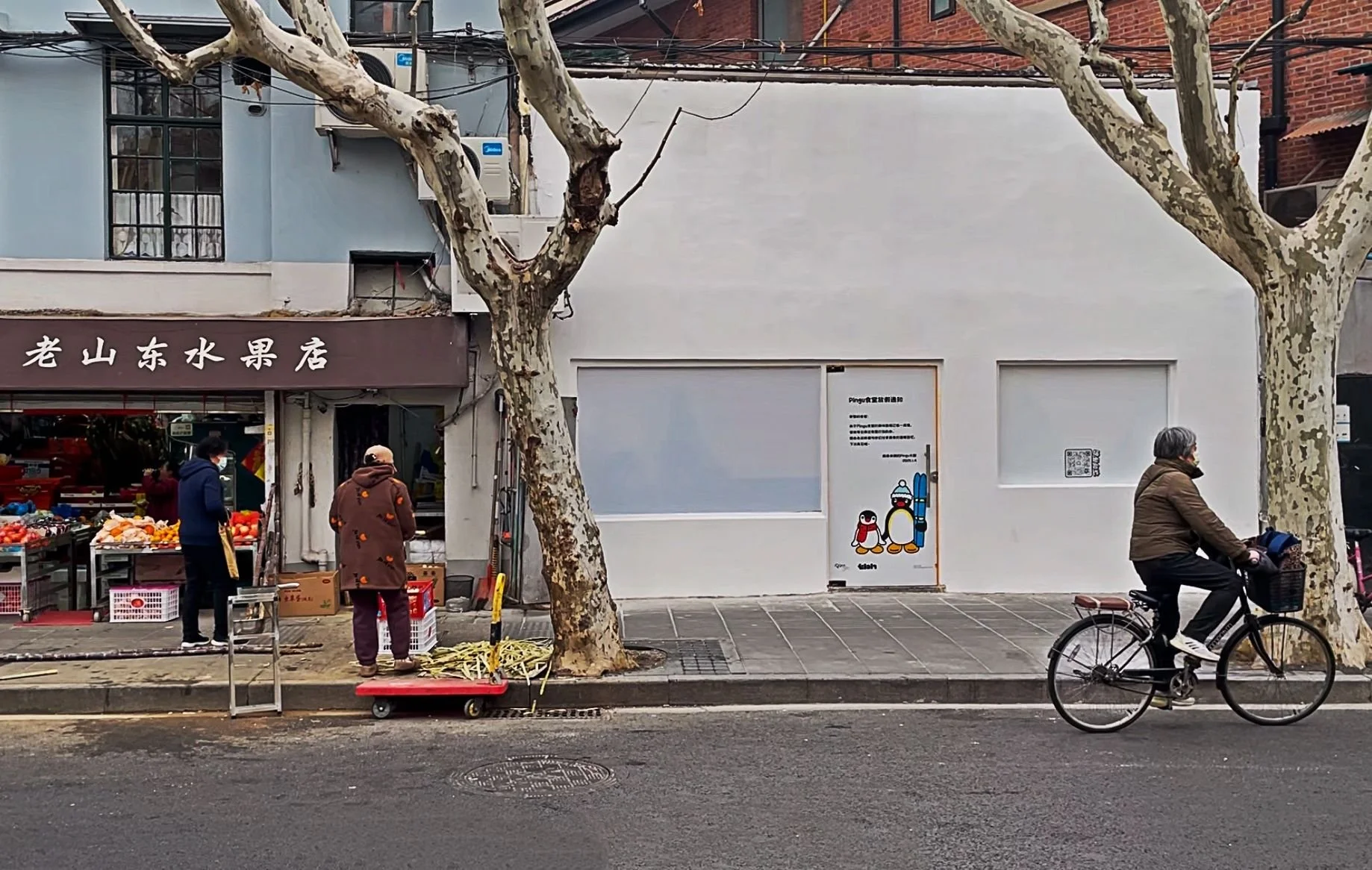
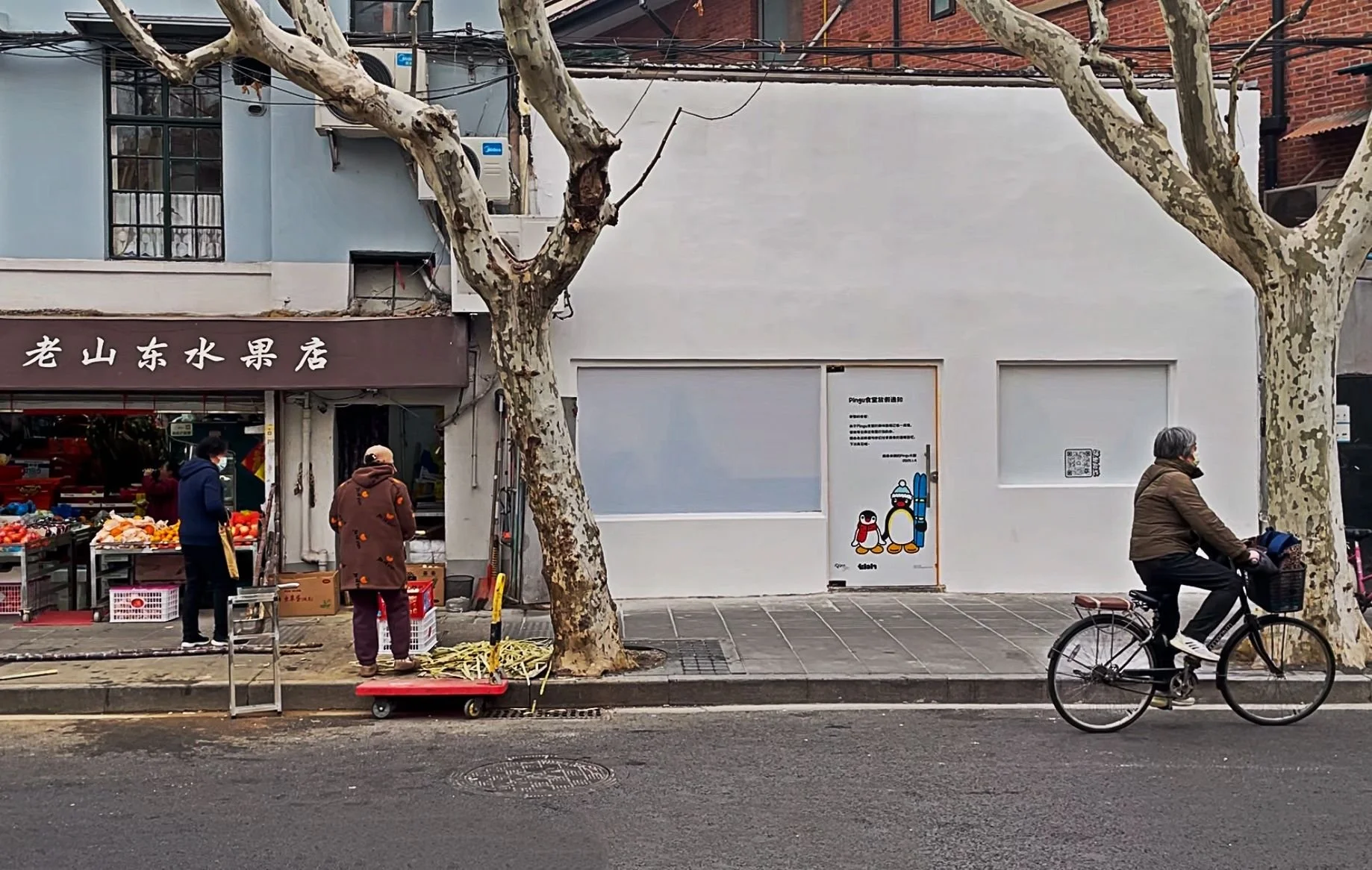
Gentrification is undeniably a good thing. But it will come as no surprise to many people reading this that it’s undeniably a bad thing too. When I moved to this area of Shanghai ten years ago, it was full of “useful” shops: little supermarkets, dry cleaners, hardware suppliers. But now all the practical shops are being priced out, replaced by flashy fashion boutiques, expensive coffee shops, and quirky speciality stores designed to appeal to the browsing Chinese tourist. What used to feel like living in a special community can sometimes feel like living in Times Square. I now need to walk a good few blocks to find my nearest key-cutter or greengrocer, and I just lost another local shop to an upcoming… Pingu store.
I guess it’s better than watching your local high street empty out and fall into disrepair, we all know plenty of neighbourhoods like that. But I’m starting to understand the feelings of the outpriced and the overlooked - the original resident who feels outpaced by the March of the Penguins - opinions I might previously have discounted as retrograde. It’s taken living in one place for a decade for me to realise this.
So let this post be my public apology for being so late to the game with this sentiment. And a public lament for all the lost little cafés, jianbing stalls and boba tea shops. The secret’s out about our cute little neighbourhood in Shanghai.
🐧🐧🐧
For the Instagram version, see here.
For the LinkedIn version, see here.
Cultural Appropriation in China?
Living in China is the best way to ensure that your life is spent constantly tying yourself up into intellectual knots. My ‘quandary of the week’ this week was about cultural appropriation.
Let me set the scene. Cultural appropriation is a situation where someone from a dominant position in society inappropriately adopts a tradition from someone in a less dominant position. And we all know what this means through a European/American lens, a white person there is clearly trespassing on someone else’s culture if they inappropriately wear afro wigs, Sikh turbans or Native American headdresses, for example. But I can potentially see plenty of grey areas to this too. For example, is it cultural appropriation when someone who speaks with an accent from a more affluent part of a country adopts a regional accent from elsewhere? Or what about when a white person becomes a fan of hip hop - with its specific African American historical context - and then starts wearing clothes associated with that style? I guess the key aspect is in what kind of adoption is deemed ‘appropriate’ and ‘inappropriate’, and we can all see how these definitions can change as society progresses… or regresses.
In China, there’s an academic term for cultural appropriation, it’s 文化挪用 [wénhuà nuóyòng]. This is way above my conversational pay grade, so I have no idea how many people even know this oblique reference. I asked a few Mainlanders, Hongkongers and Taiwanese people in my circle, and even the ones who knew it didn’t really think it applied to China. So although the dominant culture here is the Han, there’s no reckoning that a Chinese Han person wearing clothes from a minority ethnicity could be deemed intrinsically inappropriate or offensive.
It is common practice here for Han Chinese tourists to take photos of themselves in local costumes when they visit areas populated by ethnic minorities. The people I asked told me that they wouldn’t associate this with the concept of cultural appropriation, and that the behaviour of the wearer was based on respectful curiosity, thousands of years of cultural intermingling, and a genuine appreciation of the aesthetic beauty of the garments. When I asked about what the minority ethnicities themselves might think about this, for most people it was the first time they had thought about it in that way. The ones who answered did so confidently, saying that the ethnic minorities aren’t offended. At the very worst, it was a kind of Chinese ‘cosplay’ done out of reverence rather than mockery.
It’s a tricky one to figure out, because China exists outside the specific history of colonialism and slavery that typifies the way we look at cultural appropriation in Europe and the Americas. So it’s inaccurate to do a like-for-like comparison, and I try not to impose my own cultural baggage onto anyone else. What muddies the waters further is that the government in China has made a point of pushing the narrative of 和谐 [‘harmony’] between Han Chinese and the other 55 officially-recognised ethnicities in China, so anything that speaks against this is seen as political sacrilege. So there’s zero chance that I could witness an open debate about this, even if my Mandarin skills were up to it. Which they most definitely aren’t.
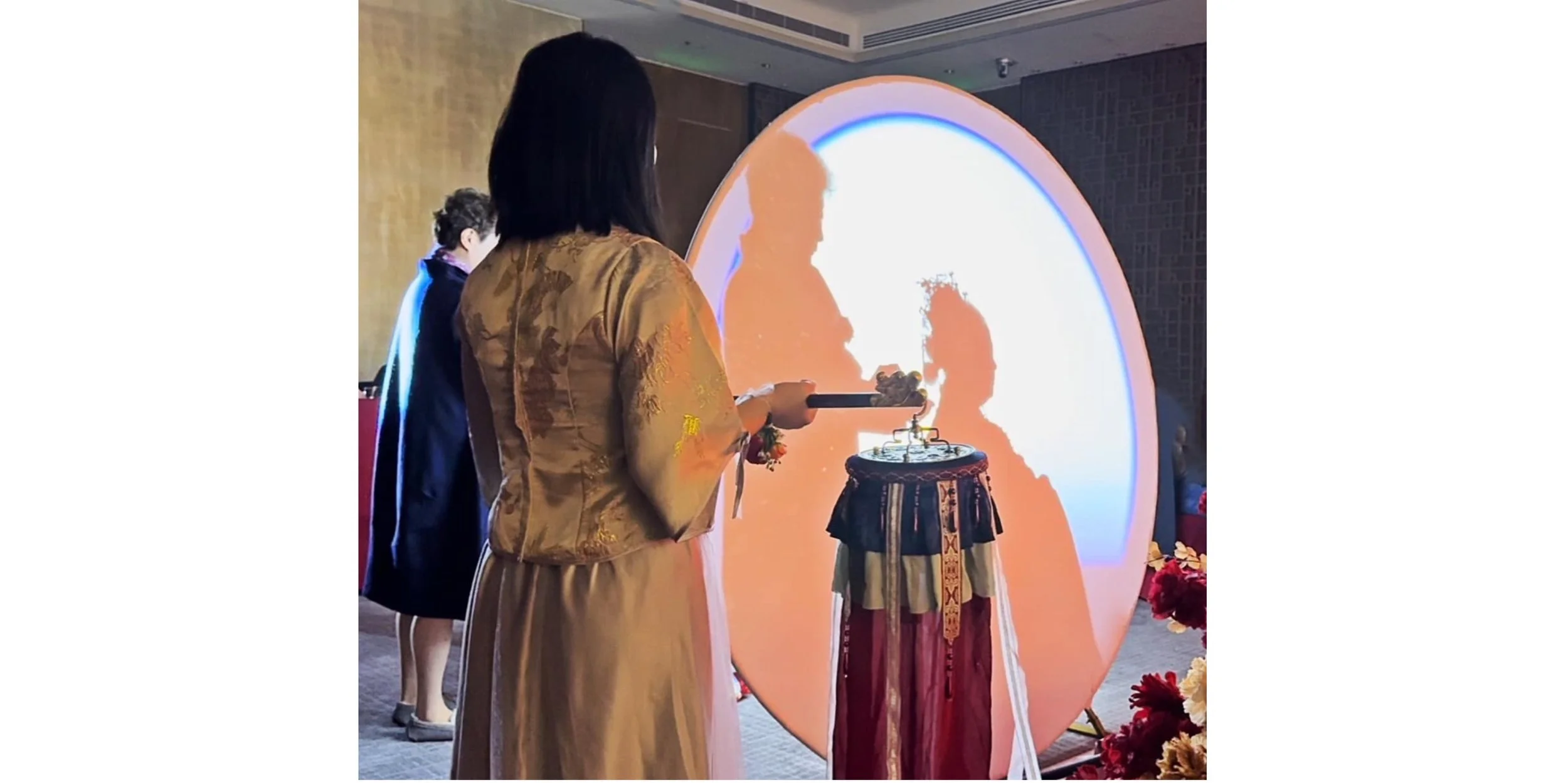
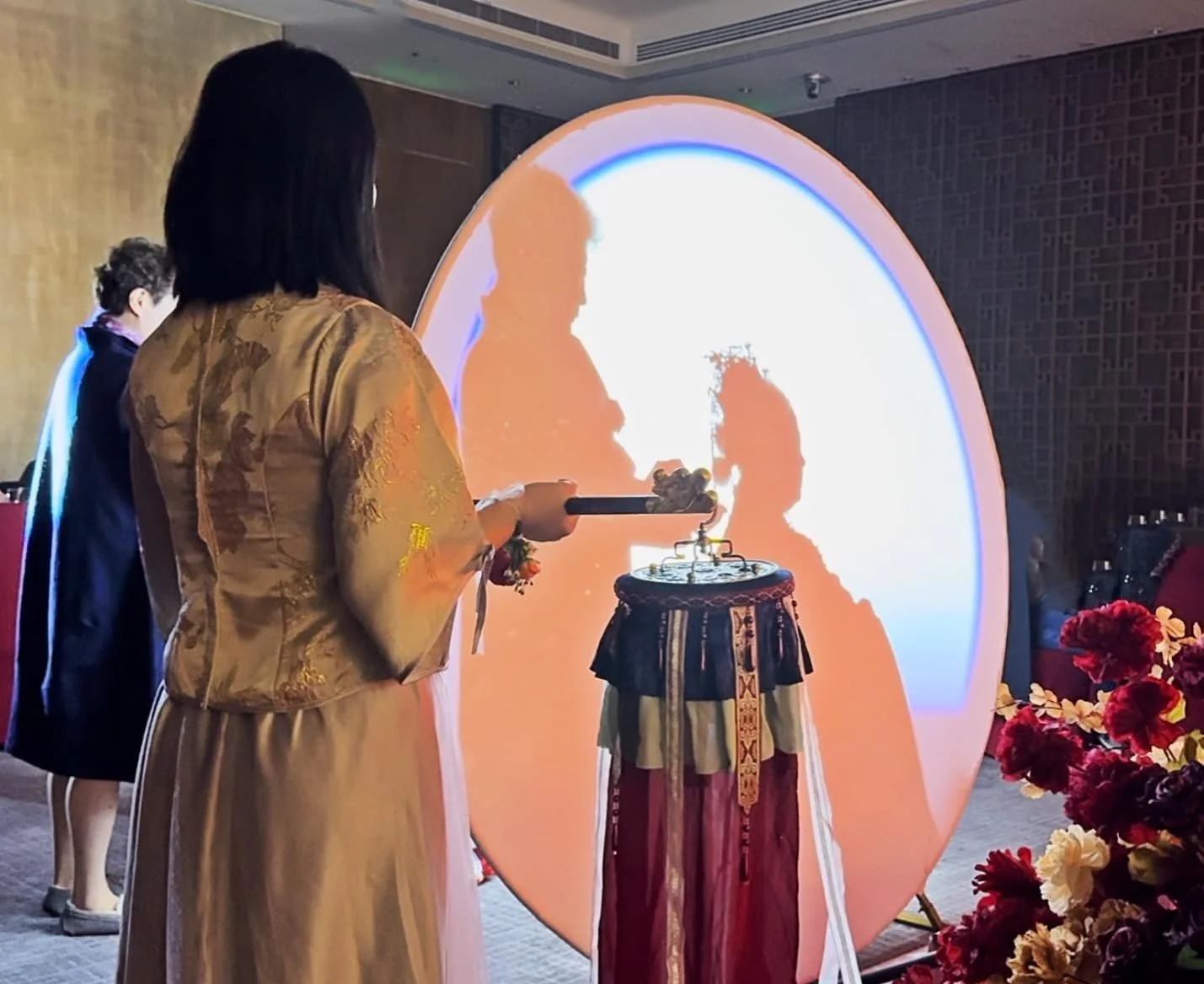
Now we’re getting to my quandary of the week. We had been invited to a traditional Chinese wedding, which in itself is quite rare in Shanghai. Most people these days have modern weddings which would be recognisable to anyone around the world. But this was very different, the bridal party were all dressed in amazing traditional attire and performed a variety of ceremonies that harked back to rites of old. So in a way, the wedding was a sort of traditional Chinese ‘cosplay’, where our fellow Chinese guests were dazzled to a rare experience in just the same way as we were. With this in mind, we had been told that the bride would appreciate if we respected the occasion, and were encouraged to wear formal Chinese attire.
I’ve lived in China for almost a decade, and have made a point of never wearing anything traditionally ‘Chinese’, lest it be misconstrued as a disrespect to my host country. Yet we were convinced that this was clearly a case of ‘appropriateness’, so we bit the bullet and got some Chinese-style suits made. That would have been the end of this anecdote, were it not for what happened on the night of the wedding. Luckily we arrived early, so we were able to see guests as they trickled into the venue. And it soon became clear that there had been a massive miscommunication. None of the other guests were wearing anything approaching traditional Chinese clothing. In fact, many of them appeared to be wearing clothes that they had worn earlier that day. We’re talking jeans, even sweatpants. Meanwhile I was sat there looking like a poor imitation of Sun Yat-Sen.
We solved the issue by quickly removing our jackets, and we were able to blend in with the other guests a little easier. But not before we were noticed by the bride and groom themselves, who both greeted us with straight faces. One day I would like to get them drunk and ask them what they truly thought about our ridiculous appearance. I hope it will become a funny family anecdote that they can tell their kids in the future. But until then I will add this to the countless other embarrassments that seem to have constituted my life up till today.
If there is any moral to this story, let it be this. The definition of cultural appropriation can indeed change over time, perhaps even in China. Sometimes it takes a generation, and sometimes it literally takes FIVE MINUTES OF TESTICLE-SHRINKING TORTURE. So when in doubt, don’t be an arse, and wear your regular clothes.
For the Instagram version, see here.
For the Facebook version, see here.
For the LinkedIn version, see here.
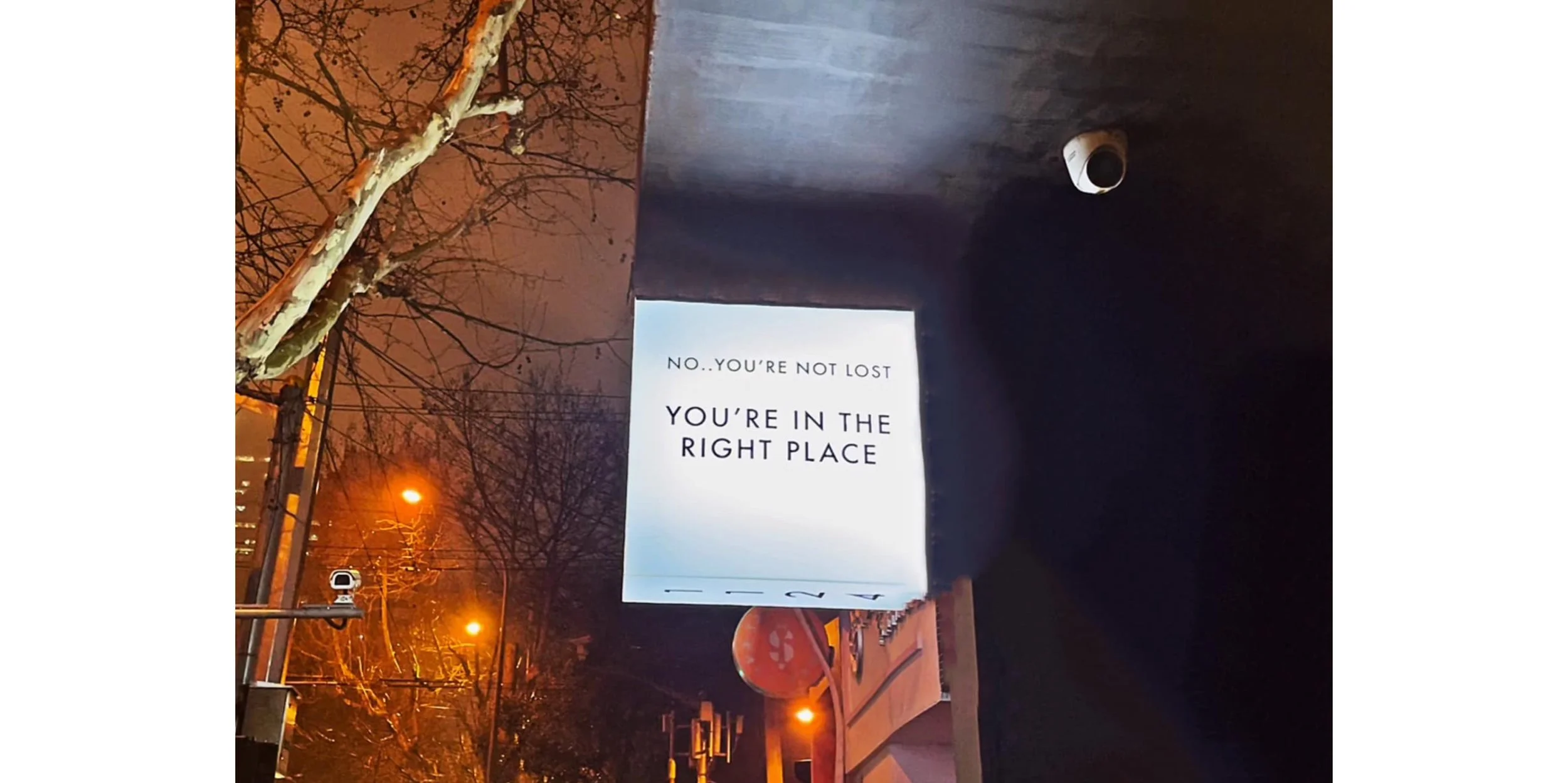
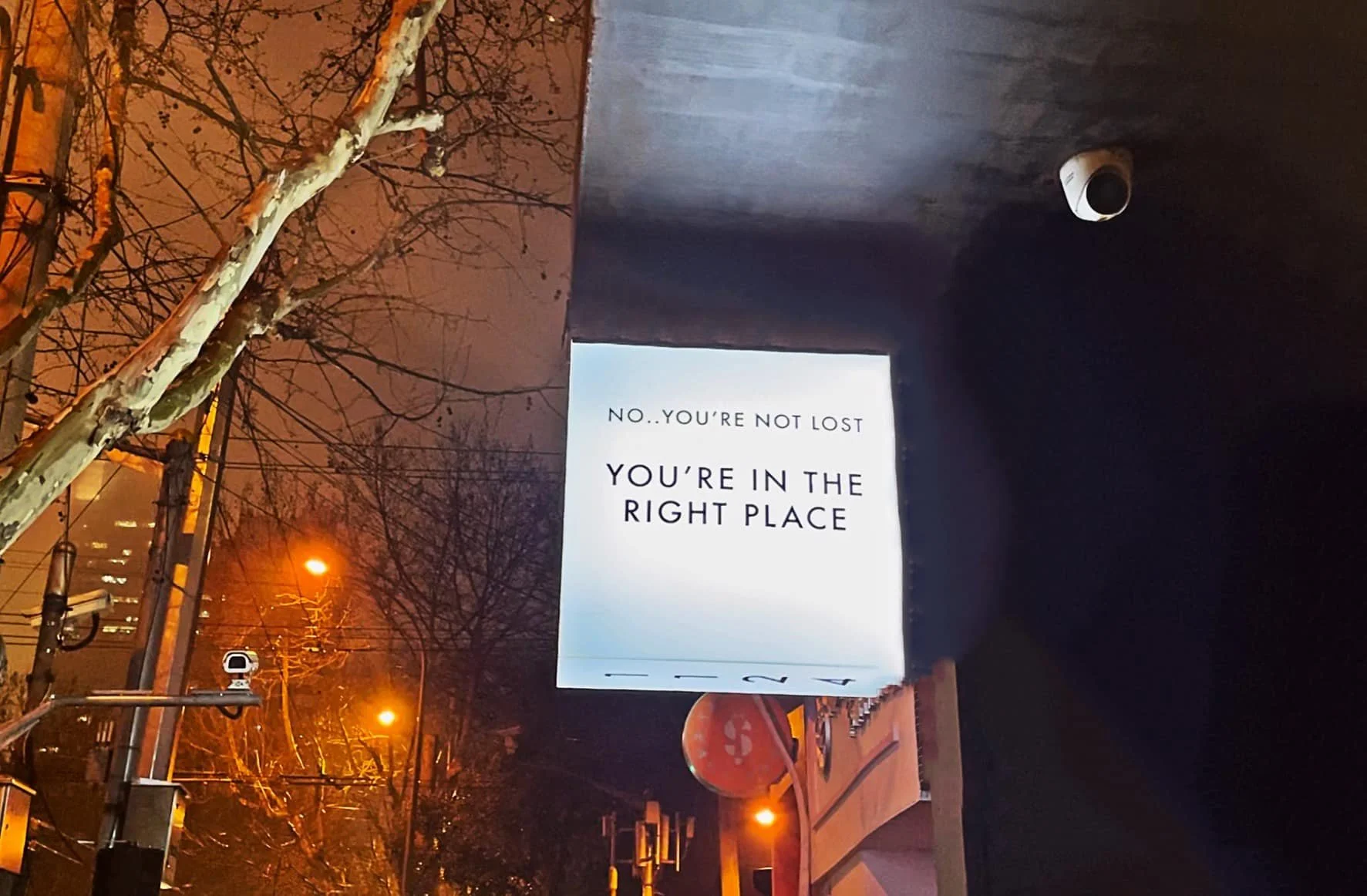
You're In The Right Place
This week marks one year since the beginning of the Shanghai citywide lockdown. 🔒🏙️
Shanghai today has now fully re-opened to visitors. The streets are busy with tourists, and smiles are returning. Long-term planning has started to creep into our consciousness again, which is a stark contrast to our day-by-day existence one year ago. So does it feel like normalcy has returned?
To those who can finally visit us in Shanghai, it probably seems that way. But for those of us who’ve been here the whole time, I feel like we’re only now beginning to process our feelings towards this city, and what we want our lives to look like from now on. Relationship status: It’s complicated.
As for Denny and me, we’re still doing well, and we’re still holding on to the same sense of adventure that first brought us here 8 years ago. But I’m also aware that I’m not posting as much on social media as I used to, which has got me thinking about why that was. Maybe I’m just used to this city, and don’t feel like sharing what has these days become so familiar. Maybe that’s it. Maybe. Whatever’s going on, I’m glad that there are still occasions when I look up and see something I haven’t noticed before, and feel inspired to share some thoughts.
I’m sure these are feelings that many people would have experienced at some point over the last year. So if you’re one of those people, I hope you’re well. I hope you’re in the right place. And if you’re not entirely sure, then maybe that’s OK too. Just remember to look up every now and again, and see what signs present themselves. 🙄
For the Instagram version, see here.
For the Facebook version, see here.
Onwards and Upwards
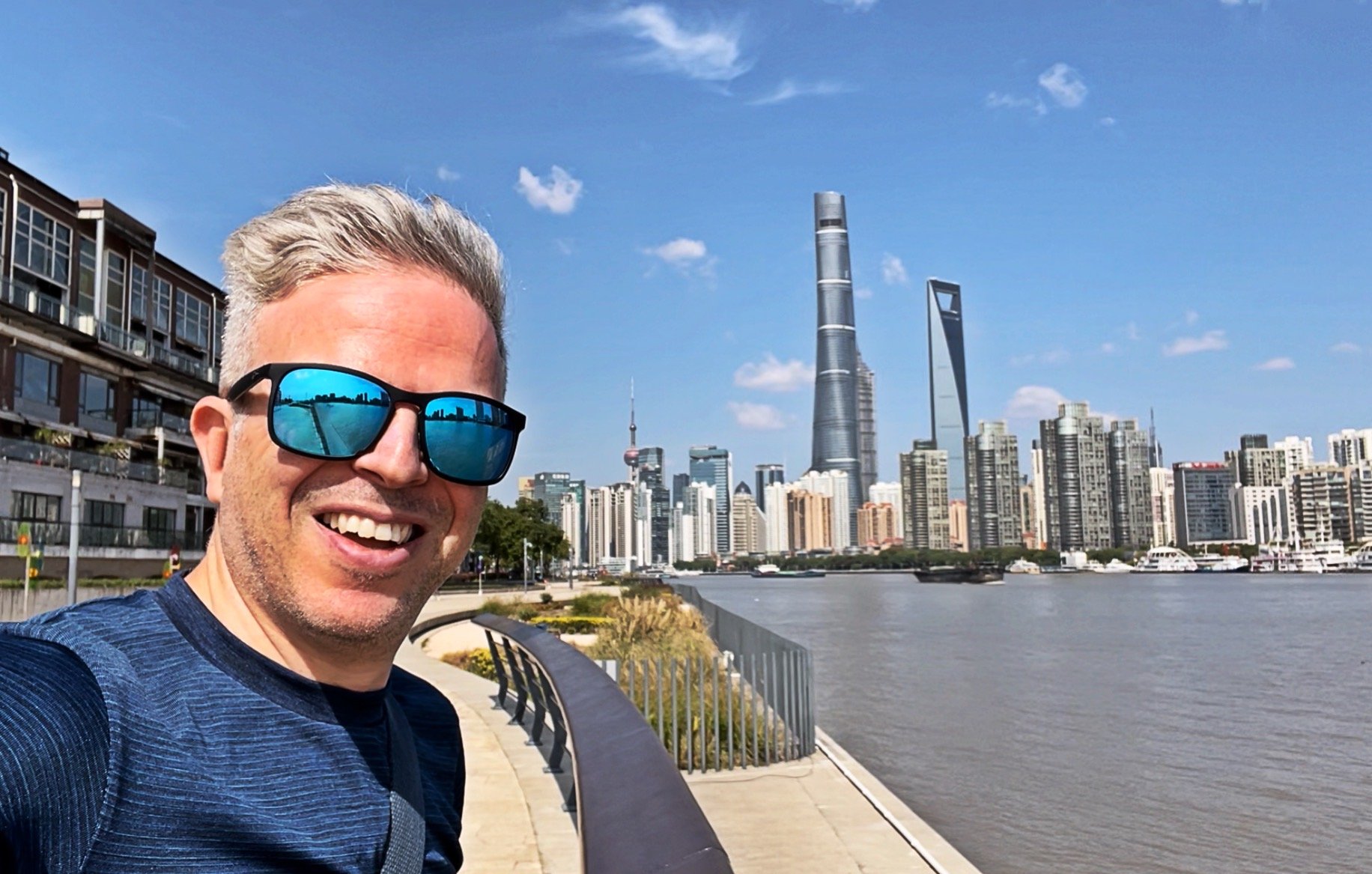
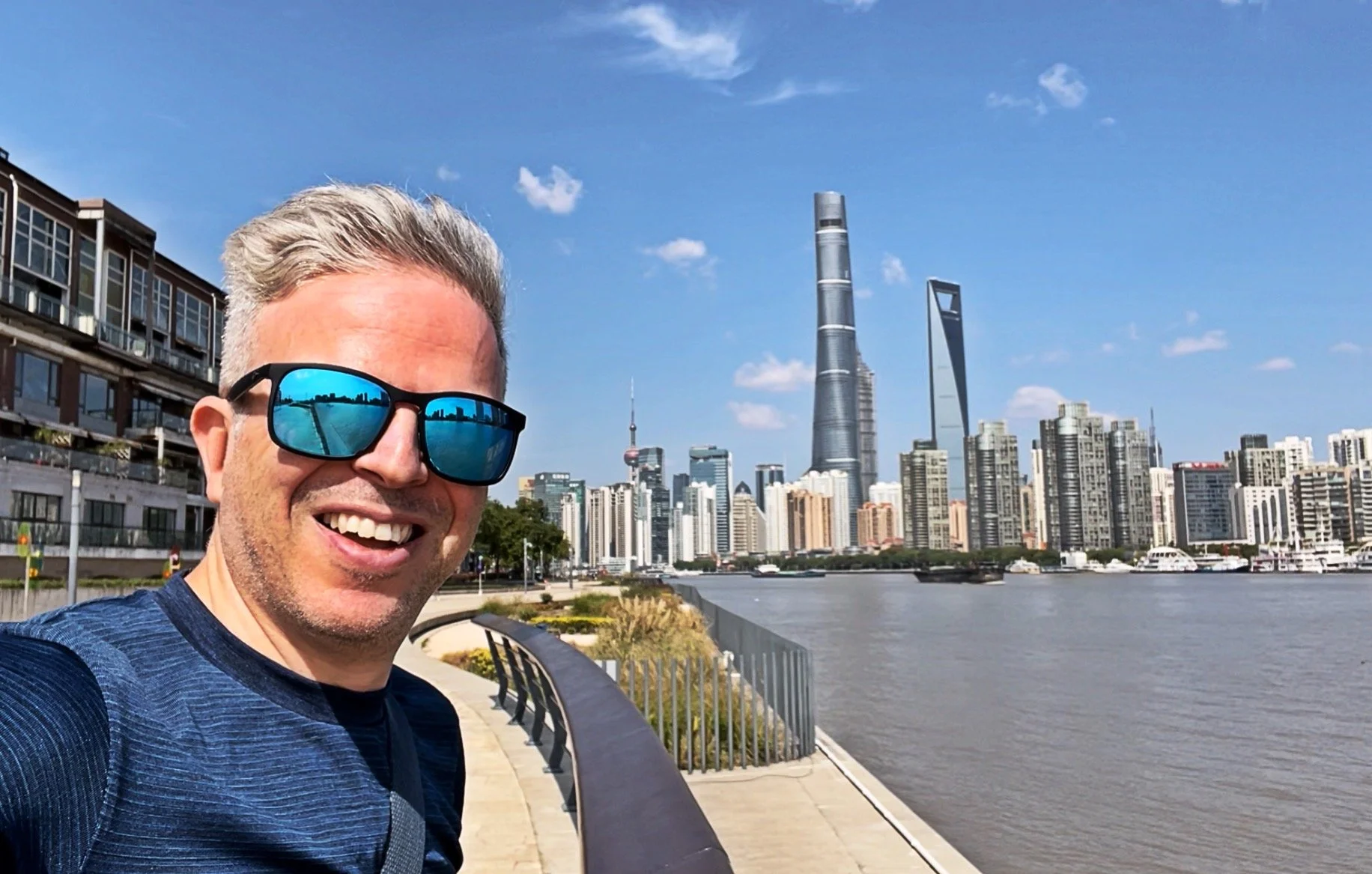
I swear I used to be 177cm tall. But these days I’m a solid 176. 🤷♂️
This won’t do. My life has shrunk enough over the last 3 years, I refuse to let the same thing happen to my height. 😡
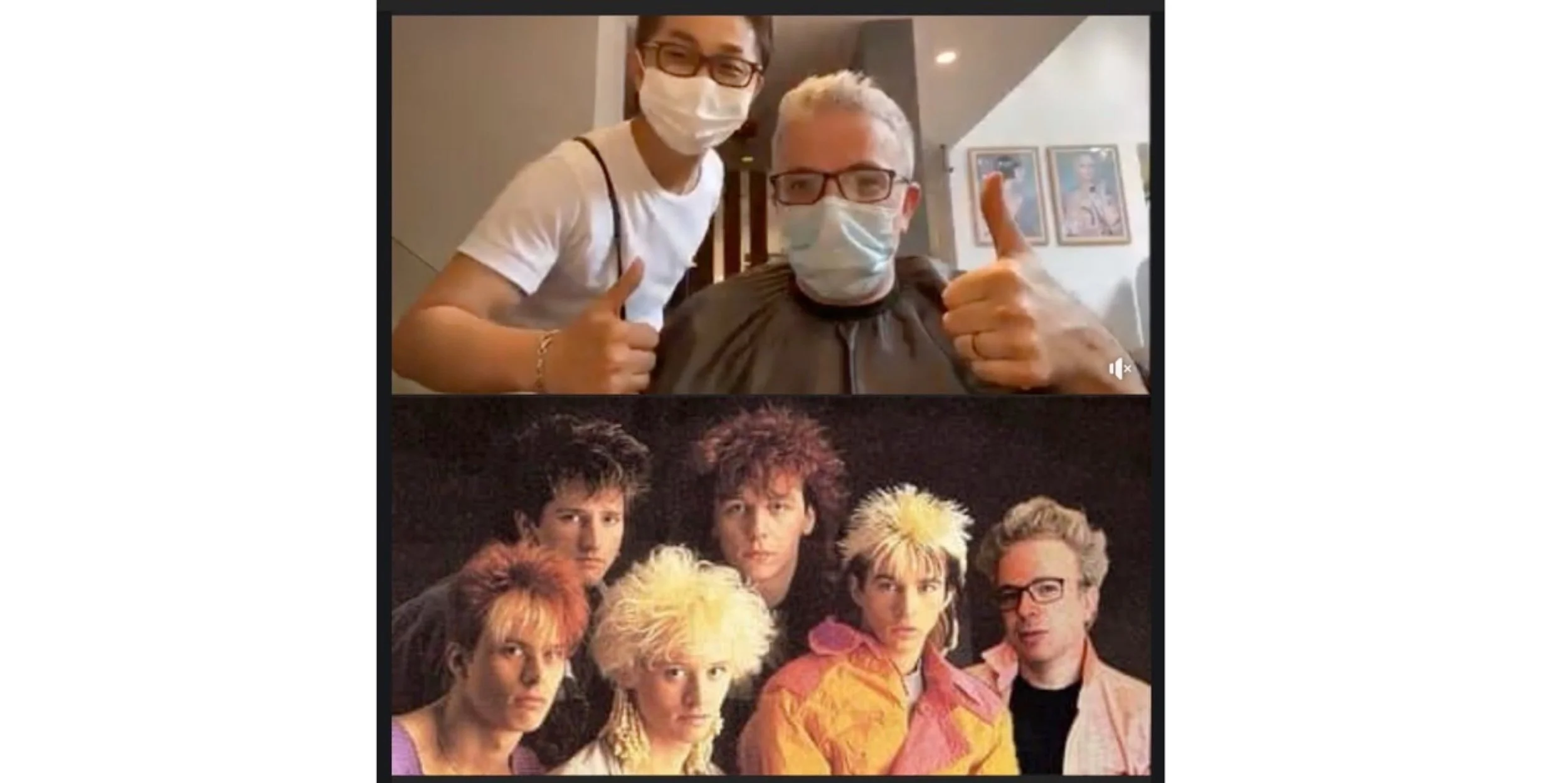
So I got myself a fresh new haircut, and now I’m up to 178. 🙌
For the Instagram version, see here.
For the Facebook version, see here.



Piazza Privilege

This post is about privilege. Today we decided to use our tiny balcony to pretend that we were in an Italian piazza rather than stuck in our Shanghai apartment. This weekend we made a feast out of the fanciest cheeses and cold cuts from our fridge. We’ve recently watched Dune, The Power of the Dog, West Side Story and CODA, all from the comfort of our (increasingly sagging) couch. And we’re surrounded by neighbours in our compound who have been very kind and supportive to one-another throughout these harsh few weeks of confinement. Even though we’ve lost our freedom for a total of 56 days and counting, we’re still luckier than 99% of people in Shanghai.
Living for so long in China starts to make you a little inured to the all-pervasive miasma of state power. So your messages of support over the last couple of months have not just been a massive morale booster, but also a useful reminder that this hasn’t been ‘normal’, and there is such a thing as individual human dignity. Having said that, it has been a little uncomfortable to read comments about our “bravery” and “endurance”, when in fact for the most part we’ve been able to wallow in the luxury of denial and disassociation. That’s the power of privilege, even in times like these.
We’ve certainly had our lows. This whole time, Denny has been working from home with a broken hand. And while I’ve been telling myself that I’m functioning fine, my body has been telling me that I’m not. One day let me regale you with all the fun and creative symptoms it came up with. But for now, I’m taking a cue from the weather and am starting the week with a sunnier disposition. Parts of Shanghai are supposedly opening up this week. No doubt there will be many days of continued false hope and confusion before this means anything to us. Until then, I’ll be in my Italian piazza. Finché c'è vita c'è speranza.
For the Instagram version, see here.
For the Facebook version, see here.
For the LinkedIn version, see here.

Retail Therapy

I’m feeling crap about the state of the world right now. So the only antidote I know to momentarily ease this existential angst is to post photos of the latest trend in China retail: brand names that sound like someone clearing their throat. 😷
For the Instagram version, see here.
For the Facebook version, see here.


My First Post-Lockdown Haircut

Life in Shanghai is slowly returning to something nearer “normal”. I just had my first haircut in 6 weeks, in a salon that was allowed to accept 3 customers at a time, for quick 30-minute cuts.
Meanwhile, the rest of the world is panic-buying toilet paper and stealing hand-sanitiser from hospitals. 🤷♂️
For the Instagram version, see here.
For the Facebook version, see here.

“98 Years Old”

I bumped into this amazing 98 year old lady.
I know this because the only Chinese I could understand her say was “I’m 98 years old”.
For the Instagram version, see here.

Coffeeshop Flags
In case you STILL didn’t think I was a nerd... I spent twenty minutes in Costa Coffee testing myself on the identity of these flags. And I got them all correct. 🤓🤓🤓 (Answers below.)

Answers from front to back:
Niger, Bahrain, Lesotho, Micronesia, United Nations, Cape Verde, Cuba, Turkmenistan, Marshall Islands, Bangladesh, Guyana, Panama, Macedonia, Maldives, Lithuania, Uzbekistan, Finland, North Korea, Guinea, Austria, Djibouti, Sao Tome e Principe, Cook Islands, Mongolia, Bhutan, Mali, Venezuela, Russia, Iran, Liechtenstein, Scotland, Somalia, Sweden, Bahamas, Andorra, Australia, United Kingdom, Afghanistan, France, Brunei, Morocco, China, Germany, Chile, Kenya, Sudan, Azerbaijan, Mexico, Ireland, Samoa, United Arab Emirates, Ghana, Chad, Fiji, Greece, South Korea, Ukraine, Kazakhstan, Slovenia, Spain, Zimbabwe, Democratic Republic of Congo, Angola, El Salvador, Singapore, Bulgaria, Canada, United States, Egypt, Saudi Arabia, Liberia, South Africa, Argentina, Uruguay, Ivory Coast, Papua New Guinea, Dominican Republic, Burundi.
And here are the flags that I always find most difficult to differentiate:
🇸🇳🇲🇱🇬🇳 (Senegal vs. Mali vs. Guinea),
🇲🇩🇦🇩🇹🇩🇷🇴 (Moldova vs. Andorra vs. Chad vs. Romania, I don’t even know the difference between Chad and Romania),
🇵🇱🇮🇩🇲🇨 (Poland vs Indonesia vs. Monaco. Monaco is longer than Indonesia.)
🇮🇪🇨🇮 (Ireland vs. Ivory Coast)
🇻🇪🇪🇨🇨🇴(Venezuela vs. Ecuador vs. Colombia)
🇱🇺🇳🇱 (Luxembourg vs. Netherlands. NL blue is darker.)
🇸🇮🇸🇰 (Slovenia vs. Slovakia)
For the Instagram version, see here.

